
Your personal access link
This is your personal access link to the guide — you have permanent access. We've also sent it to your email so you can always come back and book a free consultation with us.
Buying Your Own Home vs. Rental Property in Germany. What Makes More Sense?
A clear, numbers-driven breakdown of both paths — buying your own home vs. rental property — so you see exactly which strategy actually builds wealth for you.
What you will discover in this guide
Always On
AI Learning Assistant
Go deeper on anything in this guide — taxes, financing, strategy. Just ask.
Interactive Tool
The Pathfinder
Answer 12 questions — get your personal real estate strategy.
Side-by-Side
Real Numbers Comparison
See exactly how two paths diverge — financially, monthly, and over 10 years.
Often Overlooked
The Smartest Way to Still Own a Home
There's a path that gets you both. Most people just don't know the order.
Important — Please read before continuing
Before you make a decision that can impact your finances for decades, take a few minutes to go through this properly.
Most people don't make a bad decision because they're careless —
they make it because they never see the full picture.
This guide is designed to give you exactly that.
One important note
We completely understand the emotional desire to own your own home. It's a deeply human thing — and we have nothing but respect for it.
This guide is not here to tell you what to do with your life. What makes you happy is entirely your decision, and yours alone.
What we do want to show you is the financial reality — so that whatever you decide, you decide with open eyes.
The builder of this guide

Hey, we're Ben & Lukas 👋
Die Kapitalanleger GmbH
We started Die Kapitalanleger to make real estate investing and tax savings simple for expats in Germany. We are active investors with 30+ properties, we've helped 500+ clients build long-term wealth.
What our clients say
Pushkar
Expat in Germany
I wanted to reduce my taxes and do something smarter with my money — but I didn't know how the system actually works here."
Instead of guessing, he followed a structured approach — using real estate to reduce taxes and build a stronger financial base.
1 / 4
Alright — let's start the guide.
There are two completely different ways to use real estate.
And once you understand the difference, everything else starts to make sense.
When people talk about "buying property",
they usually think they're making one decision:
Should I keep renting —
or should I buy something of my own?
At first glance, that seems logical.
Because both options are tied to one thing:
Where you live.
But financially, something much more important is happening in the background.
The real difference is:
What happens to your money while you're living somewhere.
And this is where the two paths separate completely.
Buy to Live
You buy a property and live in it yourself.
It becomes your home —
a place to live, not an investment in the traditional sense.
Financially, this means:
- Your capital is tied to your own housing.
- It does not generate direct income.
- And it remains linked to where you personally live.
Buy to Rent
You buy a property and rent it out.
The property generates income through rent.
And your capital is used as part of a long-term investment strategy.
At the same time:
- Your own housing remains flexible.
- Because it is separate from your investments.
Key Insight
Both involve real estate.
But one is primarily a lifestyle decision with financial consequences.
And the other is a financial strategy.
And once you separate these two approaches…
you can finally compare them properly —
based on how they actually perform.
Buying your own home to live in feels like the safest decision you can make.
For most people, buying a home to live in isn't just another financial decision.
It feels like a turning point.
A sign that you've made it.
That you're building something real.
That your future is finally secure.
Instead of paying rent to someone else, you're putting money into your own home.
A place you live in.
Something that's yours.
And over time, that idea becomes more than just a plan.
It becomes the obvious next step.
This is what goes through most people's minds:
Not Wasting Money on Rent
"I don't want to waste money on rent — at least when I own, I'm keeping it."
Building Your Own Wealth
"Every payment I make should increase my own net worth, not someone else's."
Freedom & Control
"If I own my place, I finally have full control over how and where I live."
Financial Security Over Time
"Once it's paid off, my housing costs will basically disappear."
And on the surface, that logic seems completely right.
But here's the real question
Does buying your own home actually give you all of that
or does it just feel like it does?
Belief #1
Not Wasting Money on Rent
You think renting is wasting money.
But owning is where you lose the most.
Because this is what you actually feel every single month — not just on paper.
Most people never question this idea:
"If I'm renting, I'm throwing money away."
And it sounds logical.
Until you look at what you're actually paying.
Let's simplify this.
The only difference:
Now let's look at what that actually costs you — every single month.
Same Life
Different Costs
Let's take this example:
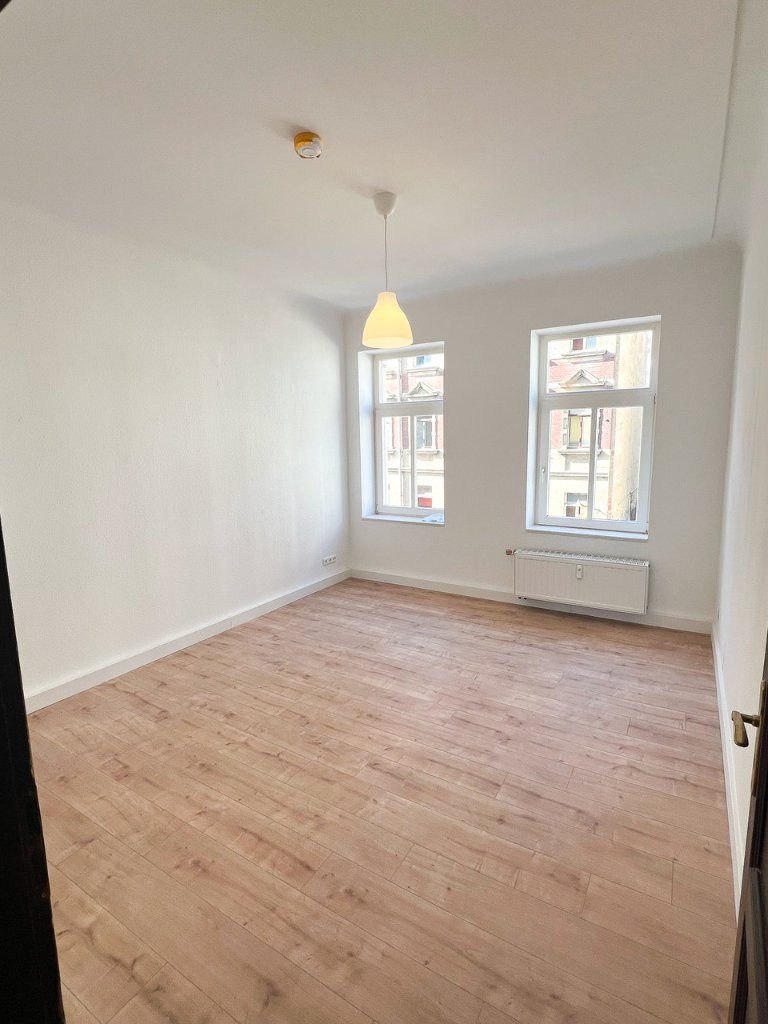
60m² Apartment · Berlin
Built 2010 · Market value: €500,000
We're looking at this exact apartment — and asking one simple question: What does it cost you to buy and pay it off versus simply renting it?
Buying your own home
All costs, all responsibility, all risk.
- • Full mortgage payment
- • Property tax
- • Maintenance & repairs
- • All ownership risk
Renting the exact same property
Same apartment, same quality. Landlord covers everything else.
- ✓ Fixed monthly rent only
- ✓ No repair costs
- ✓ Full flexibility
THIS IS THE GAP
EVERY SINGLE MONTH
€1,319
Now stop for a second.
Think about that, €1,319 every single month.
What does that actually mean for your life?
That difference is not small.
It's the difference between:
- having real financial breathing room
- or being locked into a fixed obligation
Because when you buy your own home:
- you commit to a massive monthly payment
- you can't just "adjust" if life changes
- you carry the full responsibility
- and if you can't pay — you lose the property
There's no flexibility in that.
Now compare that to renting the exact same place:
- same apartment
- same lifestyle
- same quality of living
But:
- at a fraction of the monthly cost
- with full flexibility
- and without carrying the entire risk
As a renter:
- you don't pay for major repairs
- you don't handle unexpected costs
- you don't carry long-term maintenance risk
You're not responsible for the asset.
And here's the part most people never think about:
We're not even talking about investing that difference yet.
Just imagine…
you simply keep that money.
What would that change for you?
- more freedom in your decisions
- less financial pressure
- the ability to travel, explore, or change jobs
- real financial security in your account
Or simply:
not having to sacrifice everything for one decision
Because this is the truth:
You're not "saving money" by owning your home.
You're locking yourself into one of the most expensive ways to live.
What most people think is a smart financial move…
is actually just consumption — disguised as an investment.
And once you see that…
you start asking a very different question:
If this is not the smartest way — what is?
Section 2
Building Your Own Wealth
If owning your home isn't building wealth…
what actually does?
Because taxes, interest, and leverage work completely differently for each approach.
Part 1
Taxes — where the real difference begins.
Every payment you make feels like progress.
But financially, something very different is happening in the background.
Because the system treats these two paths completely differently.
Let's look at the exact same scenario as before:
We're comparing the same €500,000 property. The only difference: you either live in it yourself (owner-occupied) or you rent it out to tenants (investment property).
60m² Apartment · Berlin
Built 2010 · Market value: €500,000
Same property. Completely different financial outcome.
(not deductible)
(tax deductible)
(100% you pay)
(75% tenant-paid)
Real money that comes back to you
At 42% tax rate, those €27,000 in deductions translate to an actual cash refund of:
€11,340
paid back to you every year by the tax office
Owner-Occupied
You can't deduct anything.
- ✗ No depreciation
- ✗ No interest deduction
- ✗ No tax benefits
You simply pay.
Investment Property
The system works for you.
- ✓ Interest deductible
- ✓ Depreciation deductible
- ✓ Maintenance deductible
And reduce your taxes every year.
Part 2
Interest — How it changes everything.
Now let's talk about one of the biggest fears people have:
Interest rates.
Most people think: "High interest is bad. I should avoid it."
But that's only true in one scenario.
Because what almost nobody understands is this:
Interest is not the problem.
How you use it is.
Let us show you why:
✓ High interest can actually work in your favor as an investor
✗ But becomes a pure financial burden when you own your home
Same scenario:
Owner Occupied
Investment Property
Same loan.
Same interest.
Same property.
But completely different consequences.
Homeowner Reality
Interest is just money leaving your account. You can't deduct it. You don't get anything back. It's simply a cost you have to carry — every single year.
Investor Reality
Interest becomes part of your strategy. A large part comes back through taxes. It allows you to control a €500,000 asset with €100,000.
That's the difference between:
paying interestandusing interest
Instead of losing €16,000 per year…
you're effectively paying around €9,280
That's a difference of:
over €6,720 every single year
For homeowners, interest is a burden.
For investors, it's a tool.
And this is money we're not even talking about investing yet.
→ money that doesn't disappear
Instead of losing it…
you could actually use it.
Because this is the truth:
The system is not neutral.
It either works for you.
Or against you.
And when you buy your own home…
you step out of the system that builds wealth.
So what do you do instead?
Part 3
What happens when you actually use your money the right way.
We're going to compare three paths — head to head — over 10 years. Same starting capital. Completely different outcomes.
🔴 Option A · Buy Your Own Home
One asset, no income
You put your €100k into a €500k property you live in. No income, no tax benefits. Growth only comes from price appreciation — and you pay €2,719/month.
or
🔵 Option B · Invest in ETFs
Solid, no leverage
You invest your €100k and the full €1,319/month you save vs. owning (no property top-up needed) into an index fund at 7% return. Solid — but no leverage, no tax benefits.
or
🟢 Option C · Invest in Real Estate
Leverage · Tax · Scale
For a rental property, banks typically require only €33,000 equity (around 7% of a €500k property). With €100k total, you can do this 3 times — controlling €1,000,000 in assets. Each property earns rental income, generates tax refunds, and grows in value. That's leverage.
10-Year Comparison · Same €100,000 Starting Capital
🟢 Real Estate Investment
Leverage · Tax · Scale
Total Wealth
€579,000
🔴 Own Home
Total Wealth
€313,500
🔵 ETF Investment
Total Wealth
€415,000
And none of this includes the monthly gap you keep.
The homeowner pays €2,719/month. The real estate investor pays €1,400 in rent for their own flat plus a €680/month top-up across their three investment properties — totalling €2,080/month.
That's a difference of €639 every single month — money that stays in your pocket, every month, for 10 years.
That's €76,680 over 10 years — and not a single cent of it is included in the wealth numbers above.
That €639 is entirely yours. You can spend it on your life, keep it as a buffer — or invest it, and watch the gap grow even wider.
We haven't even calculated what happens if you do.
Same €100,000. Three completely different outcomes.
Real Estate: €579,000 net equity · ETF: €415,000 gross · Own Home: €313,500
But here's the catch
Not all wealth is treated equally by the tax office.
🔵 ETF — €415,000 gross
When you sell, the government takes its share. Capital gains tax applies to all profits.
🟢 Real Estate — €579,000 net equity
Hold your investment properties for 10+ years and you pay zero capital gains tax in Germany.
Wealth is not built by owning one thing.
It's built by building a system that scales.
Now adjust it to your situation.
Every person's numbers are different. Change the time horizon, your tax rate, the ETF return you expect, and your current rent — and see exactly how the three paths compare for your reality.
Belief #3
Freedom & Control
Buying a home feels like freedom.
But it locks you in.
Your life changes. Your property doesn't.
There's a thought that almost every homebuyer has:
When it's mine, I have control. I'm not dependent on anyone. I can do what I want.
That feeling is completely understandable.
But here's what actually happens when you look closer.
Owning doesn't give you more freedom.
It binds you more than almost anything else.
Here's why:
High monthly commitment — less room to move
As we've seen, the monthly burden is significantly higher. That means less financial flexibility every single month. For years. Even when life changes.
You're tied to one location
A great job offer in another city? A relationship that changes your plans? With a property you own, every major life decision has an anchor attached to it.
Selling takes months. Losing money on a rushed sale is common.
Selling is slow, expensive, and uncertain
Buying a property takes weeks. Selling one can take 6–12 months. Plus transaction costs of 5–10% on both sides. You can't just "exit" when circumstances change.
Your life changes constantly. A property doesn't.
Think about how your housing needs shift over a lifetime — and how a fixed property fits into that.
Early 30s
City apartment
Small, central, flexible
Late 30s
Bigger home
Family, garden, space
50s
Quieter location
Different priorities
Later
Smaller again
Age-appropriate, accessible
With renting, you can adapt at every stage. With ownership, each transition comes with friction, cost, and risk.
Renting
- ✓ Move when life changes
- ✓ Upgrade or downsize easily
- ✓ Take opportunities in other cities
- ✓ No selling risk or costs
Owning
- ✗ Fixed to one location
- ✗ Selling takes months
- ✗ High transaction costs
- ✗ High monthly obligation, always
Key Insight
The feeling of control is real.
But actual flexibility decreases the moment you sign the deed.
And there's one last belief that ties it all together.
The ultimate reason most people push through all the doubts:
"At least one day — it will be paid off."
Belief #4
Financial Security Over Time
"At least it's paid off one day."
That's what everyone believes.
But the costs never actually disappear.
This is the final argument. And it's the most emotionally powerful one.
In 25 years, the mortgage is gone. Then I live for free. That's real security.
It sounds right. And emotionally, it is satisfying.
But financially — it's not quite how it works.
The costs never fully disappear.
Even after the last mortgage payment, a property still costs money. Every year. Without exception.
Maintenance
Ongoing repairs & upkeep
Renovations
Roof, heating, windows
Hausgeld
If in an apartment building
Property tax
Increases over time
Running costs
Insurance, utilities
Depreciation
The building ages
The Timing Problem
Major renovations often hit exactly when you think you're "done."
Roof, heating systems, and windows typically need replacing after 20–30 years
That's often exactly when the mortgage is paid off — and when income may be lower
Renovation costs of €50,000–€150,000+ are not uncommon
How investment property handles this differently.
Costs exist for an investment property too. But they work inside a different system.
Owner-Occupied
- ✗ You carry every cost yourself
- ✗ Costs are not tax deductible
- ✗ No rent income to build reserves
- ✗ Renovation = comes purely from your pocket
Investment Property
- ✓ Rent builds maintenance reserves
- ✓ Renovation costs are tax deductible
- ✓ Renovations often justify higher rent
- ✓ Costs are part of a working system
Key Insight
"Paid off" does not mean "cost free."
With a home you live in, you bear every cost alone.
With an investment, the system carries the costs with you.
So those are the four beliefs everyone has about buying their own home.
And while each one feels true on the surface…
…the financial reality tells a very different story.
But there is another way. One that satisfies all these desires — without locking you into the same constraints.
Your Path
What About Your Own Home?
But what if you still want your own home?
Then the smartest move may be not buying it first.
Let us say this clearly: wanting your own home is completely valid.
For many people, it's not just about money.
It's about stability. About having a place that feels truly yours.
About building something for yourself and your family.
That feeling is real — and we respect it deeply.
We are not here to take that away from you.
Everything we've shown you in this guide isn't meant to say "don't ever own a home." It's meant to show you what the financial reality looks like — so that your decision, whatever it is, comes from a place of clarity rather than assumption.
What makes you happy is entirely your choice. We just want to make sure you see the full picture before you make it.
That said — the problem is usually not the dream itself.
The problem is turning that dream into your very first financial move.
Because that's where many people unknowingly put themselves under pressure — financially, structurally, and long-term.
Most people think they have to choose:
either buy their own home
or focus on building wealth
But in reality, the smarter path is often neither of those.
It's combining both — in the right order.
Instead of buying your own home first,
you build your financial base first.
And then — from a much stronger position — you decide if and when owning your own home actually makes sense.
Build your financial base
Start by investing in properties designed to work for you.
- ✓ Using tax advantages
- ✓ Benefiting from leverage
- ✓ Building equity over time
- ✓ Creating additional income streams
Instead of your money being tied up in one property, it starts working across a system.
Increase stability and flexibility
Over time, this changes your entire financial situation.
- ✓ More equity
- ✓ More liquidity
- ✓ More predictable income
- ✓ More options
And most importantly: you reduce the pressure on every single decision.
Buy your home later — from strength, not pressure
Then, if owning your own home still matters deeply to you, you're no longer forced into it. You can choose it.
- ✓ Better financing conditions
- ✓ Lower relative burden
- ✓ More flexibility
- ✓ Far less financial risk
Home First
Lock yourself into one large, expensive decision — under pressure, with fewer options.
Financial Base First
Create options — and make that same decision later, under much better conditions.
The Real Question
So the real question is not:
"Should I give up my dream of owning a home?"
It's:
"Do I want to buy it from pressure — or from strength?"
You don't have to choose between building wealth
and owning your own home.
You just need the right order.
If you're not sure what that looks like for your situation —
the next step will help you figure that out.
Interactive Tool
The Pathfinder
Which real estate strategy actually fits your life right now?
Answer a few quick questions to see which path makes the most sense based on your goals, flexibility and financial situation.
12 Questions · ~3 Minutes
Not everyone should take the same path.
Let's find out which one fits you.
We'll assess your life situation, financial position and goals to give you a personalised recommendation.
Your Next Step
How We Help
How We Help
Whether you want to build wealth, reduce taxes, or buy your own home later — this is how we help you do it the smart way.
By now, you've seen that real estate is not just about owning property.
It's about using the system the right way —
based on your goals, your income, and your situation in Germany.
That's exactly what we help you do.
We don't just help you buy property.
We help you use real estate as a financial tool.
Build a strategy based on your income, taxes and long-term goals
Show you how real estate can significantly reduce your tax burden
Help you access opportunities most expats never even see
Guide you through the German system — fully in English
Structure your first investment so it actually sets you up for more
Think beyond one property — towards a scalable portfolio
Most people buy property once and hope it works.
We help you understand:
- Why some properties build wealth — and others don't
- How financing, taxes and structure actually work together
- How to make decisions that still make sense if your life changes
- How to build something long-term — not just make a single purchase
This is not about finding a property.
It's about building a system that works for you.
Fit Check
Is This For Me?
Is This For Me?
Who this works best for.
This is typically a great fit for expats in Germany who:
Earn a solid income and want to use it more strategically
Are paying high taxes and want to reduce them
Want to build real wealth — not just save money
Are open to using real estate as a long-term strategy
Want guidance in English through the German system
You don't need to understand everything yet.
You just need the right strategy — and the right next step.